

Short-term rental management companies offer convenience, expertise, and support — but they come at a cost.
If you’re considering hiring one, no doubt you have a lot of questions about their fees. It’s not just a matter of how much they charge but what you’ll get for that money and what kind of return you’ll see.
Let us unpack short-term rental management fees for you in this article. We explain how they work, what’s typically included, and how to evaluate whether they make sense for your properties.
What are short-term rental management fees?
Short-term rental management fees are what you pay a company to care for properties on your behalf. These cover a range of services (more on that below).
There is no single industry standard because short-term rental management companies offer very different packages. Some provide full-service support, while others only handle select tasks. Fees also vary across property types and locations.
The main thing to know is that short-term rental management fees are a formal part of the arrangement with your property manager. In other words, there’s no escaping them.
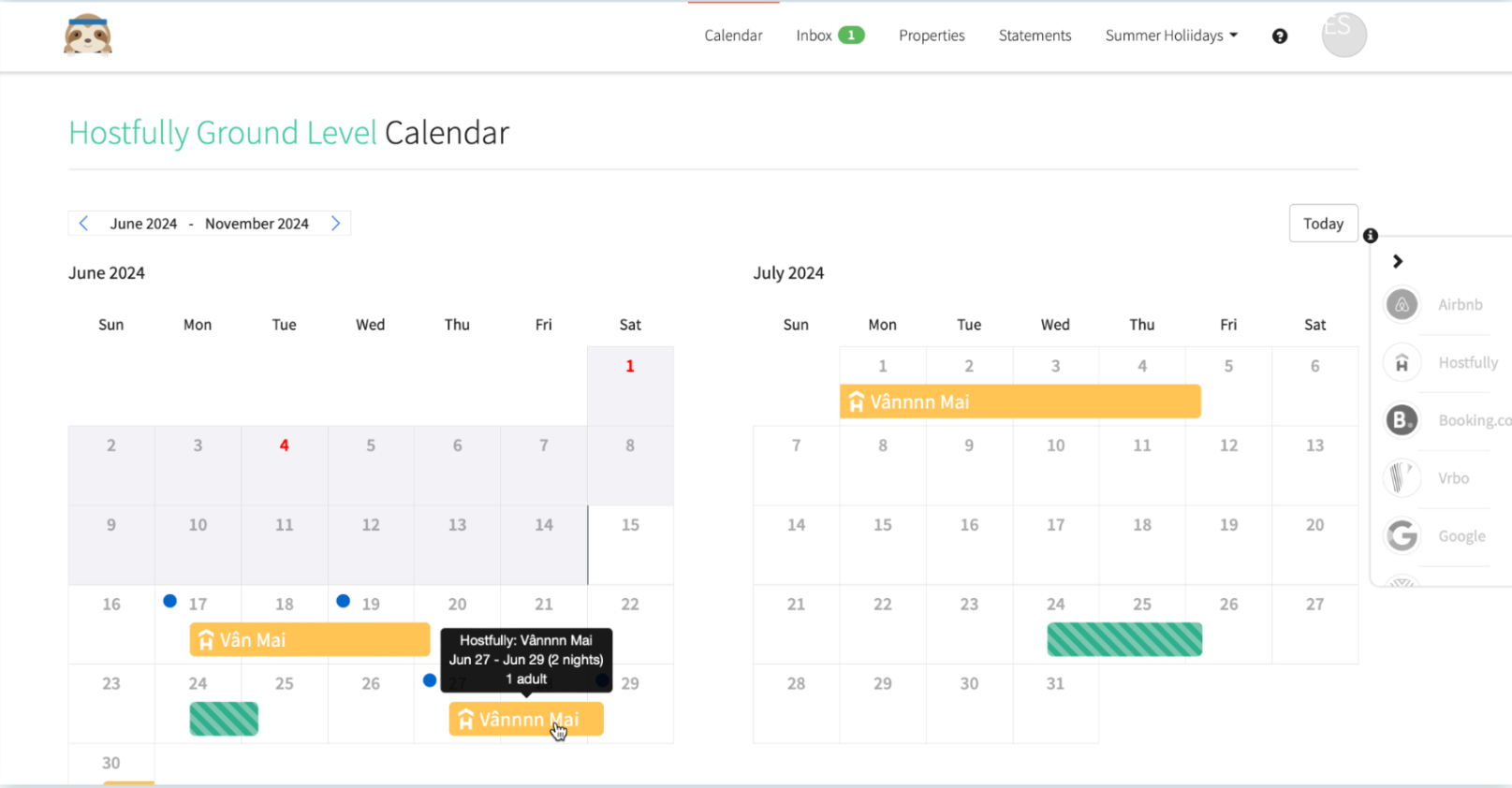
Concerned about handing over responsibility to a third person? Property Management Software (PMSs) like Hostfully help you stay involved with owner portals and reports. You get your own login and you can check what’s happening any time.
What are typical short-term rental management fees?
Although short-term rental management fees can vary, there are some standard ranges. Here’s the data from a 2025 AirDNA report for different models:
| Fee model | Range |
| Commission | 15%–30% |
| Per-booking | $50–$150 |
| Monthly | $100–$500 |
According to Denise Supplee, co-founder of Spark Rental, fees can be as high as 50% of the rent plus costs. If you’re used to managing long-term rentals, that figure may seem high.
Here’s the difference: long-term rentals are generally simpler to manage because there’s less ongoing communication and coordination involved. On the other hand, vacation rentals require regular booking management, turnover, and administration.
How do short-term rental management fees work?
As you can see, there are three typical fee structures for short-term rental management. Let’s take a closer look at each one and their best use cases:
Percentage of booking revenue
The property manager takes a fixed percentage of your rental income. It’s a popular model for owners and managers alike because costs scale with performance.
If your properties are doing well, for example, the manager earns more alongside you. They get a reward for their hard work. You then find it easier to justify paying the fee, especially if they’re actively improving occupancy or the guest experience.
This model works best if your bookings fluctuate throughout the year. It means fees are less likely to cut into your profits during slumps or off-seasons when you take less revenue.
Flat monthly fee
Some property managers charge a fixed monthly rate for a set of services. This model gives you predictable costs, regardless of how often properties get booked.
Flat monthly fees work well for properties with steady demand. There’s no need to worry about having to find the money to pay the manager during slow seasons. Plus, you keep more of the upside during peak seasons because your fee doesn’t increase with revenue.
Per-booking fee
Instead of charging a monthly rate, some managers ask for a fixed amount per booking. This structure is closely tied to your business activities because you only pay when you get a reservation.
Just be warned that fees can add up quickly during busy periods, especially if additional services are layered on top.
Per-booking fees are most useful when you have unpredictable occupancy. For example, you might have property in an area where a lot of events are booked at sporadic times of year. This model means fees won’t put you out of pocket when you keep hitting slumps.
What’s included in short-term rental management fees?
What you get for your money depends on your exact agreement. However, here’s what managers usually take care of when they provide full-service support:
- Listing management: Optimizing your listing across platforms like Airbnb and Vrbo to keep it accurate and competitive.
- Booking management: Handling reservations, calendar updates, and availability to avoid double bookings.
- Guest communication: Responding to inquiries, sending check-in instructions, and managing issues during the stay so you don’t have to be on call.
- Turnover coordination: Scheduling and overseeing cleaning between stays to ensure the property is ready for each new guest.
- Maintenance and repairs: Coordinating routine upkeep and urgent fixes through local contractors.
- Pricing strategy: Adjusting nightly rates based on demand, seasonality, and local events to stay competitive.
- Marketing: Promoting your property across channels and improving visibility to attract more bookings.
What additional fees should you expect?
Not every cost sits inside the main management fee. When you compare managers, it’s important to ask about any extra costs that may appear on top of your usual bill.
Common additional fees include:
- Cleaning fees: Some managers pass the cost of cleaning and turnover to guests, but not always.
- Deep cleaning charges: If you want managers to take responsibility for deep cleans, these are also likely to go on top of the usual fees.
- Maintenance and repairs: While coordination may be included in the regular charges, the actual labor and materials are usually billed separately.
- Guest check-in or greeting fees: Some managers charge extra for meeting people at the door.
- Credit card processing fees: These can apply when bookings are taken directly rather than through Airbnb, Vrbo, or another OTA.
- Amenity-related charges: Pools, hot tubs, parking, and similar features may increase operational costs.
Elysia Stobbe, author and property expert, says owners should be paying specific attention to how companies handle maintenance fees. Specifically, you should ask: “Do they have an in-house team, how do they charge you, and do they take it out of rent, or is it separate?”
Read our article on questions to ask a property management company to make sure you cover every corner.
How to evaluate if management fees are worth it
Now you understand how short-term rental management fees are structured, you’re ready to decide whether it makes financial sense for your situation. Let’s look at your main considerations:
Is it worth outsourcing management in the first place?
Start by thinking about why you’re considering a property manager. Some common reasons for outsourcing are:
- Limited time and energy
- Lack of expertise
- Competing priorities
- Inconvenient working hours
- Distance from the property
- Regular travel away from the area
- Disinterest in the business side of things
If you can’t point to a clear reason, that’s a sign you wouldn’t actually benefit from a property manager. Perhaps you simply feel as though you should. But if you enjoy being hands-on and have time to manage your business, there’s no need to get someone else involved.
Unsure if you’re ready to outsource? Read our article on whether you should hire a property management company to help make the decision.
What work would I realistically take off my plate?
Property managers should be able to take over specific responsibilities. It’s no use hiring someone if you simply end up creating tasks for them to do.
Before committing, make a list of the processes you currently handle. You should confirm which tasks you can actually offload to a property manager and which you’d need to manage yourself.
Then estimate how many hours everything takes. Make sure you take seasonal fluctuations into account, because you’re likely to be busier during some months than others. These estimates should give you a clearer idea of how much a property manager could save you.
What will I actually pay once everything is included?
Calculate how much you can expect to pay based on the services required and the going rate for property management companies in your area. You can see how easily it’ll fit into your budget.
When you start approaching managers, you can also ask for a monthly estimate. The number should help you understand what you’ll pay in practice, rather than relying on a single percentage or flat fee.
Comparing managers on this basis also makes it easier to spot when a lower fee is offset by higher add-on costs.
How does the fee affect my earnings per stay?
Don’t just focus on percentages. Look at what each booking actually leaves you after you’ve paid your property manager. This is particularly useful when comparing different pricing models because the impact on your profit margins can vary depending on occupancy and pricing.
You can work out roughly how much you’ll pay in fees using your average nightly rate and typical booking length. It’s a simple sum:
(average rate x number of days) x the manager’s percentage as a decimal = total fee
Then subtract the total from the average rate multiplied by the number of days to see how much is leftover.
Will this setup improve performance or just maintain it?
While this consideration isn’t necessarily a deal breaker, it’s worth thinking about whether a property manager is likely to improve your property’s performance or simply maintain operations. Experts could actually make you more money by making stronger pricing decisions, responding faster to guests, and ensuring a smoother stay.
Ask how the manager approaches pricing, marketing, and guest experience. You can also ask whether they can point to measurable improvements they’ve made with other properties.
How to reduce or control management costs
If full-service management isn’t within your budget, there are ways to keep costs under control. Some of the most practical approaches include:
- Taking on selected tasks yourself: You don’t have to outsource everything to a manager. See what you can handle yourself and leave anything outside your expertise to the manager.
- Using automation to reduce reliance on third parties: PMSs like Hostfully can automate key operations like guest messaging, booking management, and listing updates.
- Using smart devices: Smart locks, noise monitors, and thermostats can reduce the need for in-person coordination and help prevent issues before they escalate. Leading solutions integrate with PMSs like Hostfully so you can manage them in one place.
- Negotiating the scope of services: Many managers offer flexible arrangements. Instead of getting a full-service package, ask whether you can remove inessential services like marketing or pricing to reduce the overall fee.
- Optimizing your property to reduce workload: Well-maintained properties, durable furnishings, and fewer high-maintenance amenities can reduce turnover coordination.
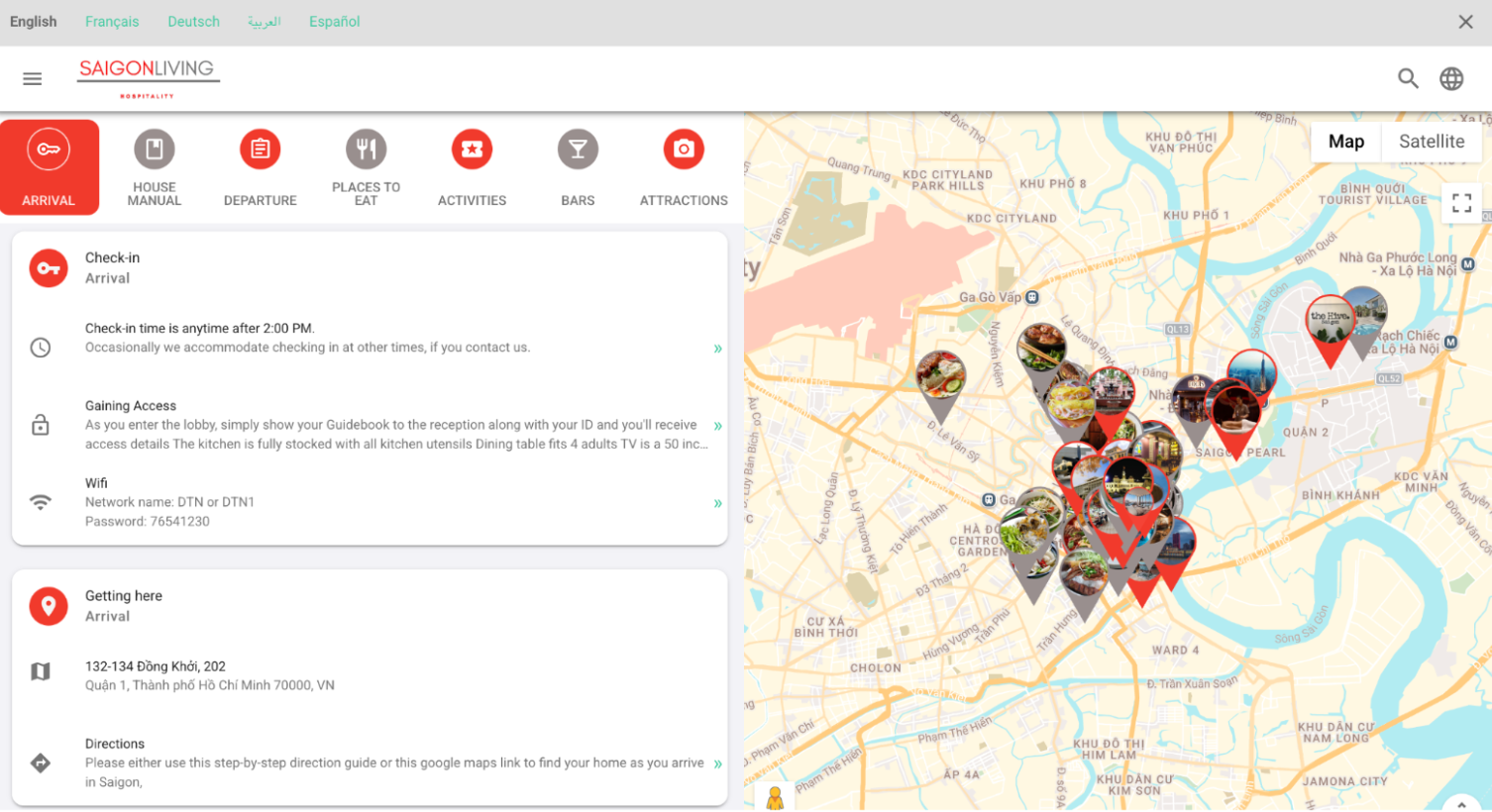
- Setting clearer guest expectations: Clear house rules, check-in instructions, and FAQs can reduce the number of messages your manager has to deal with. You should consider sending guests a digital guidebook like Hostfully’s with all these details for easy reference throughout their stay.
Build a more efficient vacation rental management setup
Short-term rental management fees only make sense when the service behind them is well-coordinated and clearly managed. Once you’ve agreed on charges, the next step is making sure your setup actually delivers on that value.
Hostfully helps you get more out of your property manager by improving how you coordinate, communicate, and track what’s happening across your rental. Our platform gives you a single system that keeps everything aligned and visible.
With Hostfully, you can:
- Centralize guest communication in a unified inbox shared with your team or manager
- Keep bookings and availability in sync with a channel manager
- Coordinate cleaning schedules and maintenance tasks with clear workflows
- Track performance, occupancy, and revenue across properties
- Manage a direct booking website alongside OTA listings in one place
- Integrate pricing tools to support consistent, data-driven rate adjustments
Hostfully enables you to work more effectively with your property manager and make sure fees lead to a smoother and more profitable rental business.

FAQs about short-term rental management fees
What percentage do most short-term rental managers charge?
Fees vary across locations but most managers charge between 15% and 30% of your monthly income for standard support. The more hands-on they’re expected to be, the higher their rates.
Do property management fees include cleaning and maintenance?
Fees don’t always include cleaning and maintenance. Sometimes managers charge for them separately or pass them on to guests. It’s important to check whether these services are included before you commit to a contract, so you understand the true cost of the arrangement.
Are short-term rental management fees negotiable?
In many cases, fees are negotiable. Some property managers are open to adjusting their fees depending on the services you need, the number of properties you have, or how involved you plan to be. It’s always worth discussing what’s included and whether there’s flexibility before signing a contract.